Funded by the National Science Foundation, this International Research Experience for Students (IRES) project supports a multi-year research internship focused on dryland system sustainability in Kenya from 2024 to 2027. The program offers undergraduate students a unique opportunity to engage in field-based research on the complex interactions among climate change, land use, livelihoods, and ecological resilience in East Africa’s dryland regions.
The field component of this project is based at the Mpala Research Centre in Laikipia County, Kenya, and involves collaboration with local institutions, researchers, and communities. Students will participate in hands-on research related to rangeland ecology, pastoral livelihoods, climate adaptation, and sustainable land management. Beyond the fieldwork, the program emphasizes mentorship, collaborative analysis, and professional development, preparing students for graduate study and careers in environmental science, sustainability, and development. This IRES project contributes to building globally engaged scholars while advancing scientific understanding of sustainability transitions in vulnerable dryland social-ecological systems.
We are recruiting the 2025-2026 cohort. Please see more information and apply here.
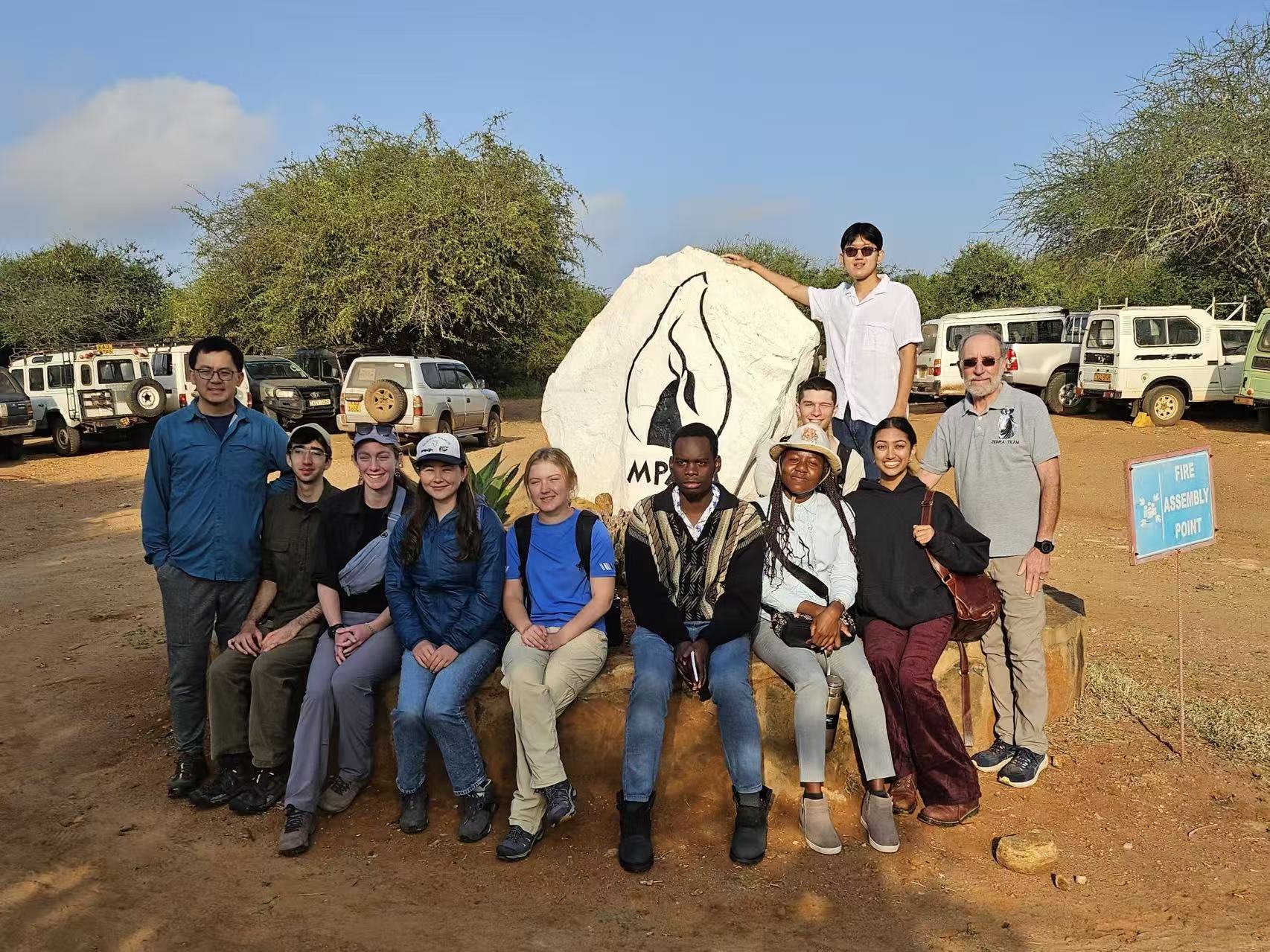
2024-2025 Cohort
Josh Dobrinsky is an undergraduate student at Cornell University studying Global Development with a concentration in Economic and Social Development. Growing up in Miami, Florida made him interested in wildlife conservation and sustainability at a young age, and he continues to study sustainability in the dry landscape of Israel.
Sanjana Kumar is a rising sophomore at Princeton University’s School of Public and International Affairs with minors in Environmental Studies, and Technology and Society. Her focus is on the geopolitics of climate change and factors of displacement, with a research concentration in data-driven approaches to sustainable transitions in the Global South.
Eleanor Merchant is a rising junior at Princetonpursuing a B.S.E. degree in Civil and Environmental Engineering with a minor in Religion. She is interested in studying how large-scale climatic shifts affect land usage. At Mpala, she is interested in identifying and modeling the spatial-temporal variation of land use and examining how land degradation and the resulting variability in grazing affects herding community practices.
Molly Murphey is an Environmental Analysis major at Scripps College with a concentration in environmental philosophy, politics, and economics. Molly interned at the Gulf of Maine Research Institute as an NSF REU researcher and worked in food justice in her Northern California hometown. She is passionate about collaborative environmental governance, ecosystem-based management, and science communication.
Ben Quint is a junior at Cornell University majoring in Global Development. He is passionate about resilience and justice in the food system. As a USDA Wallace-Carver Fellow, Ben conducted field research on climate adaptation, and now works to quantify livestock’s impact on people and the planet with the FAO.
Marlo Taylor is a fourth-year undergraduate at the University of California, Los Angeles (UCLA), double majoring in Biochemistry and Ecology, Behavior, and Evolution. Her research at UCLA focuses on the release of proteins from polymeric hydrogels. Originally from Northern California, Marlo enjoys long-distance running, backpacking, and exploring Los Angeles by public transit in her free time.
 Liao Research Group